понедельник, 11 июля 2011 г.

Marijuana plants discovered during NY house fire

Marijuana plants

Firefighters discovered dozens of marijuana plants while battling a blaze at a Yonkers house.

Firefighters responding to the fire at 2:40 a.m. Sunday found four bedrooms filled with the plants.

Yonkers Assistant Fire Chief George Kielb told the Journal News "it was basically a pot-growing house."

Kielb said the house looked like a normal home from the outside but all the windows were covered with plywood.

No one was at home when firefighters responded to the fire, which burned through part of the roof.

Kielb said the marijuana was found under heating lamps in a hydroponic system connected to electrical lines that had been diverted around the home's meter box.

The investigation into the fire and marijuana is continuing.

Union Township may act on marijuana laws this week

marijuana laws

Union Township could give final approval this week to a pair of laws to regulate and license businesses related to Michigan's medical marijuana law.

The township board already has given a preliminary OK to a proposed amendment to the township's zoning law and a new law that would require medical marijuana dispensaries and growing operations to get licenses from the township.

But at least one township resident is worried that by establishing a licensing regime, the township is giving approval to activities that violate federal law.

"Federal law puts marijuana as a Schedule 1 medication," said pharmacist Jim Horton, himself a former township planning commissioner. "In a nutshell, Schedule 1 medications are classified as having no legitimate medical purpose."

He said pharmacists cannot have it in their pharmacies without breaking the law.

"By passing this ordinance, you're allowing businesses to violate federal law," Horton told board members. Currently, federal drug enforcement authorities are not enforcing the law as it applies to the medical use of marijuana.

"If the current federal administration undergoes any changes," Horton said, "you're left with a nightmare of businesses being raided, businesses being shut down."

He also warned that it's conceivable that federal sanctions could be brought against municipalities that appear to encourage production or use of marijuana.

In 2009, the Justice Department told prosecutors they should not focus investigative resources on patients and caregivers complying with state medical marijuana laws. A recent memo to federal prosecutors from U.S. Deputy Attorney General James Cole says that view has not changed.

"There has, however, been an increase in the scope of commercial cultivation, sale, distribution and use of marijuana for purported medical purposes," says the new memo by Cole.

Bristol Tobacco Factory offers subsidised places for summer school

The Tobacco Factory has recently announced that an increased number of subsidised places for this year’s summer school will be available due to the generosity of the Denman Charitable Trust.

The theme of this year’s summer school is Swan Lake Unplugged, an opportunity for young people to explore the incredible story of Swan Lake without the fear of tutus or tights.

The school will be led by Tid from Fairground, the experts in theatrical storytelling, and Kwesi Johnson from Kompany Malakhi, the masters of physical theatre and dance. During the course of the week the participants will delve deeply into the story of good versus evil and love versus violence; finding out about the story of Odette - following a curse cast by the evil sorcerer Von Rothbart she is a swan swimming on a lake of tears by day and a beautiful princess by night; she meets Prince Siegfried, who falls in love with her, and for a while it looks as if the curse may be lifted.

During the week skills will be developed in physical theatre and dance, with the best work captured on film to show family and friends. Participants will be encouraged to be creative, take risks and work together to explore new ways of telling the classic story. The summer school provides a unique opportunity for young people to be creative in a safe and supportive environment with the support and guidance of real pros.

The summer school will run at the Tobacco Factory’s Brewery Theatre from 15 until 19 August, from 10AM until 5PM each day; it is suitable for young people over the age of 13 years. The cost of the summer school is £150, with a number of subsidised places available.

понедельник, 4 июля 2011 г.

Electronic Cigarette Injector

e-cigarette injector

Forget skyrocketing gas prices, as an estimated 45.9 million U.S. smokers are dealing with other cost inflation issues. With the cost of cigarettes on the rise, many smokers have turned to a one time investment in a cigarette rolling machine, as well as discounted bulk buying of filtered cigarette tubes and tobacco. In fact, All Fun Gifts lists its Powermatic 2 as one of the hot items among its 5,000 plus SKUs. According to Jayson Magura, owner of All Fun Gifts, “The Powermatic 2 is an electric cigarette injector device. It is better than a rolling machine, providing your customers with an improved cigarette buying alternative, peace of mind, and choice.”
Roll Cigarettes Without the Hassle

For a suggested retail price of $100, smokers can purchase the ability to inject their cigarette tubes without the hassle of rolling. Once the smoker has chosen the preferred filters and tobacco, a perfect cigarette is made in seconds, with all the ingredients known and no added chemicals. This electric cigarette injector has controlled tobacco intake, and comes with a removable tobacco tray. For those independent retailers servicing smokers looking for such an alternative, you can purchase the Powermatic 2 for $69 wholesale, or $65 wholesale per unit with an order of a dozen.

Established in 1999 and originally named Appalachian Creations, All Fun Gifts has transformed from a smoking line focused wholesaler, to a one stop shop alternative wholesaler. Through both its website and catalog, offering 264 pages of products, smoke shops and gift shops looking for alternative gifts will find a wide range of products, from the extensive smoking line to clothing, games, jewelry, hacky sacks, and much more. Magura adds, “Much like the Powermatic 2’s quantity discount, the company offers quantity pricing for many of its products, as well as monthly specials such as free shipping and sometimes 10 percent off the entire minimum order of $100.”

Court lifts order against NY Indian cigarette tax

cigarette business

New York's decades-old quest to tax the millions of cartons of cigarettes sold by Indian tribes to non-Native customers was revived on Tuesday after an appeals court lifted an order blocking collection of the $4.35-per-pack tax.

The Appellate Division of state Supreme Court in Rochester vacated a temporary restraining order that's been in place since June 10 and denied a request by the Seneca Indian Nation, New York's largest tribal tobacco retailer, for a preliminary injunction while it challenges Tax Department regulations.

State officials did not indicate when collections might begin.

“The administration will move aggressively to collect the taxes,” a statement from Gov. Andrew Cuomo's office said.

The state anticipated collecting $500,000 a day in new tax revenue beginning Sept. 1, 2010, but has been stalled by legal challenges from at least five Indian nations. The Seneca case before the court was the latest stumbling block.

Seneca Nation President Robert Odawi Porter said Tuesday the nation would ask the state's highest court, the Court of Appeals, to review the decision.

“In our treaties with the United States, we gave up most of our land to retain the `free use and enjoyment' to conduct business in our remaining territories free from the state's taxes,” Porter said in a statement. “New York will never collect a cent of revenue from tobacco sales occurring in our territories, and revenue projections so indicating are foolishness.”

Owners of non-Native American convenience stores, who've watched the reservation cigarette business flourish as New York has increased its cigarette tax to the highest in the country, urged the state to act immediately. Free of taxes, Native smoke shops charge about half the $10 off-reservation price for name-brand cigarettes and even less for brands manufactured on reservations.

The state has talked about taxing cigarette sales to the general public since 1988 but instead has largely followed a policy known as forbearance. Attempts to collect the tax in the 1990s resulted in sometimes violent protests and fires on Seneca territories and a reluctance by state officials since then to push the issue. Then last June, lawmakers, faced with a $9.2 billion budget deficit, voted to move forward with collections.

“Today's appellate court ruling adds yet another judicial decision affirming that the state can collect these taxes, close this loophole and finally provide our retailers with the fairness they have been seeking for decades,” said Jim Calvin, president of the New York Association of Convenience Stores.

Cigarette wholesalers would be required to pay the sales taxes up front and then pass along the levy to the tribal retailers they supply. Some wholesalers have already indicated they would stop supplying reservation stores if the tax is enforced.

Porter said the nation, which has about 172 retail operations, would rely on tribally manufactured cigarettes to sustain its tobacco economy, a sentiment echoed by the Oneida Nation of central New York.

“Today marks the beginning of a new era in the nation's tobacco trade and exercise of our sovereignty,” Porter said.

“While the state may be able to embargo through taxation premium brands from entering our territory, it cannot tax the brands made in our territory or any of the Six Nations,” Porter said. “We will never stop fighting the state's predatory actions.”

четверг, 2 июня 2011 г.

Following Faith Peggy Fletcher Stack and Kristen Moulton

tobacco use

The nation's faith leaders are making a pitch to Major League Baseball: Toss out smokeless tobacco.

"Baseball players are role models for adoring youth whose lives are threatened by chewing tobacco,” said Galen Carey, National Evangelical Association vice president for government, in a news release. “The players’ union should agree now to a tobacco-free ballpark, for their own sake and for the health of their fans.”

Smokeless tobacco use causes oral cancer, gum disease, tooth decay and mouth lesions, the release notes. Its use may also serve as a gateway to cigarette smoking, the nation’s No. 1 cause of preventable death.

Baseball Commissioner Bud Selig has proposed prohibition of tobacco use at major-league games, a move supported by a growing coalition of medical groups, public health officials and fans. Smokeless tobacco already is banned in the minor leagues.

The religious leaders, representing 25 faith groups, are particularly concerned about the rising use of smokeless tobacco use among high school boys, which has climbed 36 percent since 2000.

Several young baseball stars have acknowledged publicly their addiction to smokeless tobacco and the difficulty in quitting, but so far the players' union has not responded to Selig's proposal.

"Big-league ballplayers have a responsibility,” the release said, “to be better role models for young fans.”

Baseball fans can send letters to their favorite MLB team asking them to support the tobacco ban.

Anti-Tobacco Campaign Heats Up in China Despite Conflict of Interest Among Administrators

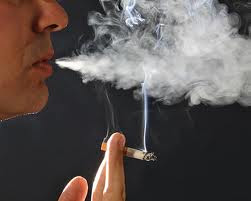
China is on a severe tobacco crackdown to show that they are taking World No Tobacco Day seriously. Industry figures show that China produced 2.38 trillion cigarettes in 2010, rising a staggering 40% over the past decade. The tobacco industry currently generates about 7% of the government’s annual revenue. However last year, the cost incurred by people smoking outweighed the tobacco profits and jobs created by $9.5 billion.

Tobacco kills 1.2 million Chinese every year according to official figures. China has more than 300 million smokers with second-hand smoke affecting about 740 million people, according to the 2011 China Tobacco Control Report released by the Chinese Center for Disease Control and Prevention (China CDC) Thursday in Beijing.

China has ratified the World Health Organization Framework Convention on Tobacco Control (WHO FCTC). But the treaty’s implementation is in the hands of a multi-agency work group that includes the State Tobacco Monopoly Administration, the regulatory body that shares the same management staff with China National Tobacco Corporation. Calls to kick tobacco industry representatives out of the multi-agency work group in charge of implementing the WHO treaty have been mounting in the health sector for some time. A survey conducted by the China CDC shows less than 25% of the population have a thorough knowledge of the harm posed by smoking and second-hand smoke. Voluntary smoking controls have proved ineffective, with laws and regulations being the only effective way of curbing the habit. Without a reduction in consumption of tobacco in China, global tobacco control cannot make big strides.

The government for its part is making strides in curbing tobacco use. In February, the State Administration of Radio, Film and Television (SARFT) ordered film and TV studios to restrict smoking scenes and to ban shots showing tobacco brands or minors in scenes while others are smoking. In March, a revised regulation on health management in public places issued by the Ministry of Health said smoking would be banned in enclosed public locations, which took effect in May this year.

Tobacco awareness therefore, provides an interesting forum for CSR initiatives. This is exactly what RAK Ceramics has cached in on when it included tobacco awareness as part of its CSR. RAK Ceramics is the world’s largest manufacturer of bathware and ceramic tiles. For World Tobacco Awareness Day, they held a seminar to highlight the dangers of smoking.

They have been the recipient of the Middle East Business Leaders Summit & Awards (MEBLSA) 2011 ‘CSR Company of the Year’ award. According to their head of Marketing and Corporate Communications, ”As a responsible corporate citizen RAK Ceramics is keen to create maximum awareness about the dangers of tobacco use. We understand that tackling an issue of this magnitude requires sustained efforts, which is why we are committed to undertaking several awareness campaigns.”

Perhaps with a combination of more companies taking on tobacco awareness as their CSR as well as government initiatives, there will be a gradual decline in consumption.